Steam turbine Power plant
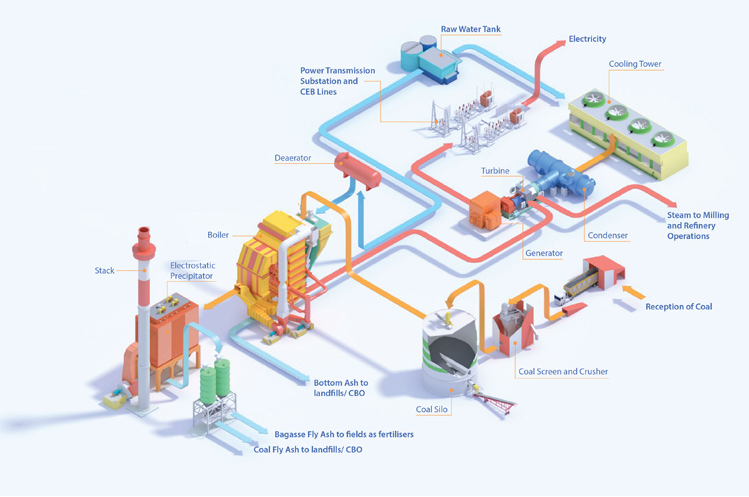
A thermal power plant is referred to as a thermal power plant and is a plant that uses combustibles (such as coal) as fuel to produce electricity. Its basic production process is: the fuel heats the water to generate steam during combustion, converts the chemical energy of the fuel into heat energy, the steam pressure drives the steam turbine to rotate, the heat energy is converted into mechanical energy, and then the steam turbine drives the generator to rotate, converting the mechanical energy into electrical energy.
A: The combustion gas system—coal: is sent to the mill by an automatic conveyor belt-funnel and a meter. After pulverization, it is mixed with high-temperature steam in a certain ratio, and then blown into the boiler by the nozzle to burn. The circulating pure water in the entire drain pipe constituting the lining of the furnace wall is heated to boil to generate steam. After burning, the ash falls into the ash outlet and is discharged. The flue gas in the flue is driven by the superheater, and then heated by the steam in the heater to raise the boiler in the preheating economizer, the combustion gas in the warm water and the air heater, and finally discharged through the precipitating dust collector and the chimney. In the atmosphere.
B. Steam system - After superheating, the high-pressure high-temperature steam is first sent to the high-pressure turbine to rotate it, and then reheater is used to make up the heat energy. Then, the medium-pressure turbine and the low-pressure turbine are sequentially sent to exhaust all the heat energy. The condenser is restored to raw water, which is circulated through the heater and the economizer.
C. Cooling Water System—The cooling water in the cooling tower (cooling tower) is supplied by the river, well, sea, and water system, and is cooled by the cooling water from the condenser.
D. Power Generation System - An engine connected to a turbine rotor generates electricity that is boosted by a transformer and then enters the power system.